
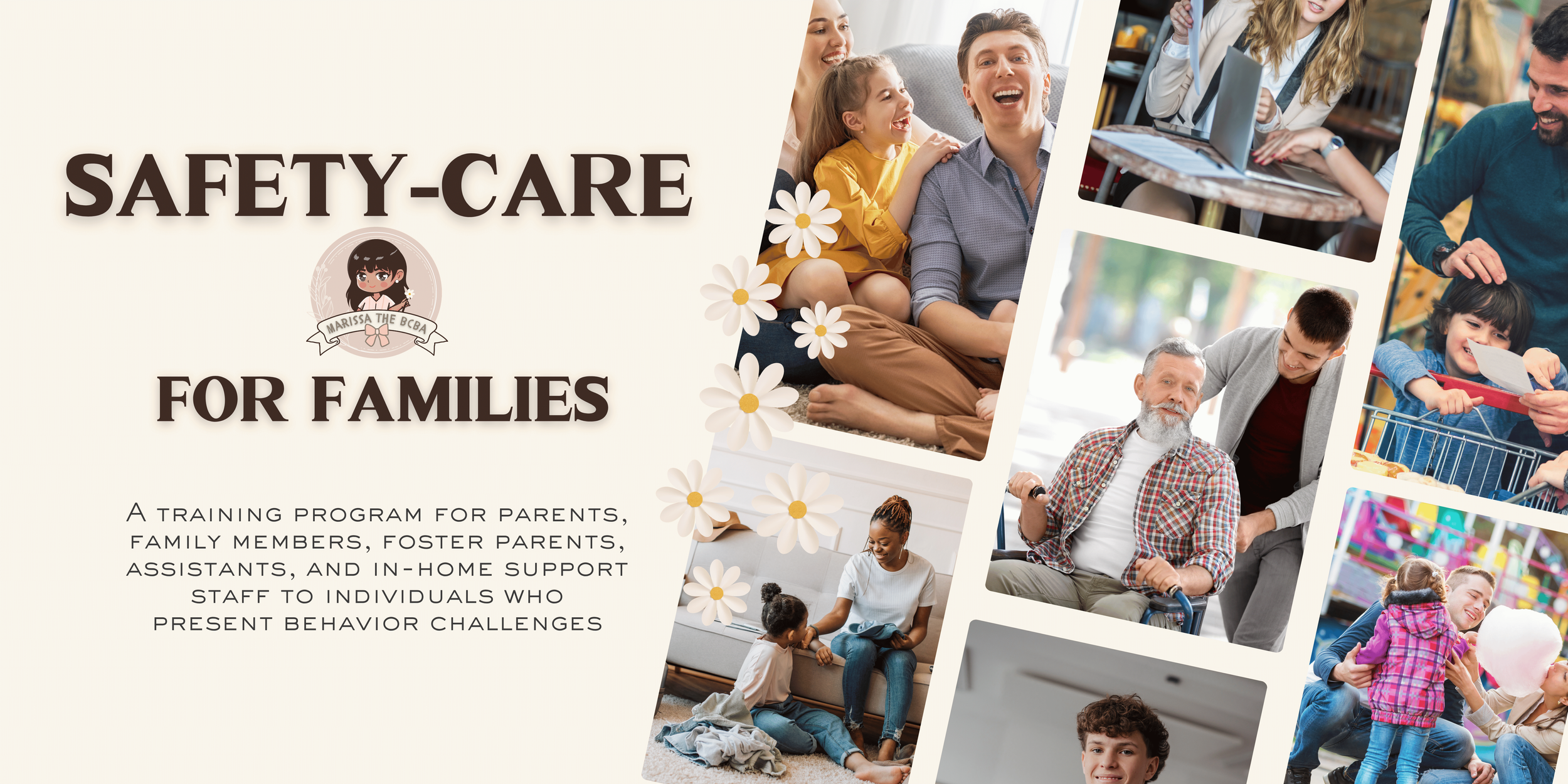
Safety-Care for Families™
A structured, evidence-based training program that equips parents and caregivers with real skills to prevent, minimize, and safely respond to dangerous behavior — right at home.
What is Safety-Care for Families?
Safety-Care for Families is a caregiver-focused training developed by QBS (Quality Behavioral Solutions). It's designed specifically for family members and support people who live with or care for an individual who may engage in challenging or dangerous behavior.
Unlike general crisis intervention programs built for clinical settings, this curriculum is adapted for real home life — giving you practical strategies grounded in behavior analysis, de-escalation, and safety planning.
A note from me: I offer Safety-Care for Families as part of my parent coaching and supplemental support services, because caregivers deserve the same level of preparation that professionals receive. You shouldn't have to navigate dangerous moments without training.
What's covered in the training?
The curriculum has three progressive lessons. You participate in whichever lessons are most relevant to your family's situation — but they must be completed in order.
Understanding & Prevention
Can be delivered in a larger group. Appropriate for any caregiver supporting someone at home. Can be completed over telehealth over multiple days.
Protective Responses
Small group format with individualized instruction. Covers physical response skills for common situations.
Physical Management & Recovery
Small group format. For caregivers whose family member may require a higher level of physical support to remain safe.
How do I get started?
Here's what working together on Safety-Care for Families looks like:
-
1Reach out for a consultation We'll talk about your family's situation, your child's behavior profile, and what level of training makes sense for your household.
-
2Determine which sessions fit your needs Not every family needs all three sessions. We'll identify where to start based on the behaviors you're navigating and what support is already in place.
-
3Complete the training Session 1 can be done individually or in a group. Sessions 2 and 3 are hands-on in a small group format with individualized coaching throughout.
-
4Integrate skills into your home routine I'll support you in applying what you've learned — connecting it to your family's behavior plan, safety plan, and the everyday rhythms of caregiving.
Frequently asked questions
Ready to feel more prepared?
Reach out to learn whether Safety-Care for Families is a good fit for your family — and how it can work alongside the services we're already building together.
Get in touch